The best domain name ideas come from repeatable patterns, not from 250-name lists. Ten patterns, from real words and compounds to domain hacks, country codes and founder names, explain a large share of well-known brand names. Pick two or three that fit your product, generate candidates inside them, then test each one before you pay.
The timing matters. On October 22, 2026, BuySI Domains checked 40 obvious AI-themed words over RDAP and found all 40 already registered in both .ai and .si. The one-word names founders reach for first are gone, so method now beats inspiration. The patterns below come with documented company examples, followed by the full snapshot and a four-step test.
What is a good domain name idea?
A good domain name idea is one a stranger can hear once, spell, and remember the next day, and one where nobody else already holds the mark. Those four tests matter more than length, meaning or extension. A name people cannot spell leaks traffic, and a name someone else holds invites legal trouble.
A few secondary checks follow from the same logic. The name should be easy to pronounce in your first customers’ languages and free of hyphens or numbers that listeners cannot hear. It should also leave room for the company to grow beyond its first product.
Each pattern below trades one of these qualities against another. Invented words are easy to protect but carry no meaning. Real words carry meaning but are rarely free. For the full checklist, including length and extension choice, see our guide on how to choose a domain name.
10 patterns for generating domain name ideas
A naming pattern is a repeatable rule for building domain name candidates, such as “join two short words” or “drop a vowel from a real word.” Working inside one pattern produces dozens of on-brand domain name ideas in a single sitting, because the rule narrows the search. The table below lists ten patterns, a documented company example for each, and the main risk that came with it.
| Pattern | Real example | Why it works | Main risk |
|---|---|---|---|
| Real word or metaphor | Mistral AI, named after a strong wind that blows from southern France | Instant imagery and an easy spelling | Single dictionary words are almost always registered already |
| Compound of two words | Dropbox (drop + box), Facebook (face + book) | Says what the product does in two short sounds | Good compounds go early; both companies launched on longer domains |
| Invented word | Kodak, built by George Eastman around the letter K | No prior meaning, so it is easier to own and protect | You have to teach people what it means and how to spell it |
| Dropped vowel or altered spelling | Flickr, from the word “flicker” | Turns a taken real word into an available variant | Users type the real word: 95% of flicker.com hits were direct in 2010 |
| Prefix or suffix | getdropbox.com, thefacebook.com | Gives you a launch domain when the exact name is taken | Looks temporary; both companies later acquired the exact-match domain |
| Short letter combination | ibm.com and hp.com, both registered in March 1986 | Short, fast to type and fits any logo | Letters carry no meaning, and the short combinations were claimed decades ago |
| Domain hack | del.icio.us, bit.ly | The extension finishes the word | Misplaced dots, plus the country registry’s rules: Libya seized vb.ly in 2010 |
| Country code as meaning | .ai (Anguilla), .io, .si (Slovenia) | The extension adds a second layer of meaning | You inherit a foreign registry’s eligibility and policy rules |
| Classical roots | Anthropic (Greek), Audi (Latin for “listen”) | Sounds serious and reads across languages | Can be hard to pronounce or feel academic |
| Founder or place name | Adobe, named after a creek behind John Warnock’s house | Comes with a built-in origin story | A personal name can be lost: August Horch could not use his own |
Kodak is the classic invented word. George Eastman liked K as “a strong, incisive sort of letter” and tried many combinations that started and ended with it, according to the University of Rochester. Invented names like this sit at the core of most brandable domains, because nobody else has a prior claim to them.
Altered spelling works until people type the real word. Flickr’s co-founder Caterina Fake said the team liked “Flicker” so much that they simply dropped the E. When Yahoo finally acquired flicker.com in 2010, TechCrunch reported that 95% of the domain’s hits were direct visits, which it put down to people misspelling Flickr.
Prefixes buy time. Dropbox ran on getdropbox.com until it acquired dropbox.com in October 2009, and Facebook began as thefacebook.com before it owned facebook.com. Both companies later paid to remove the prefix, so treat get-, try- or the- as a launch domain with a planned upgrade.
A domain hack uses the extension to finish a word, as del.icio.us and bit.ly did. People misplace the dots, which is why Delicious moved to delicious.com in 2008. A hack also follows its country registry’s rules: in 2010 Libya’s registry seized vb.ly, and TechCrunch warned that bit.ly could be at risk too. Our guide to domain hacks covers how to vet one.
Classical roots give a name weight that travels across languages. Daniela Amodei told Stripe in a 2023 interview that one reason for the name Anthropic is that the word means relating to humans; it comes from the Greek anthrōpos. Audi is the Latin translation of founder August Horch’s surname, which means “listen” in German. He could not use his own name because his former company had registered it.
Domain name ideas for AI startups, and where .si fits
.si is Slovenia’s country-code domain. For AI companies it reads as SuperIntelligence. That reading is our framing, not an official meaning, but it turns the extension into part of the name, the same way founders already use .ai.
AI startups have already used most of the patterns above: Anthropic took a classical root, and Mistral AI took a real word. With .si, the most natural pattern is a word that contains AI, so the full domain carries both AI and SI.
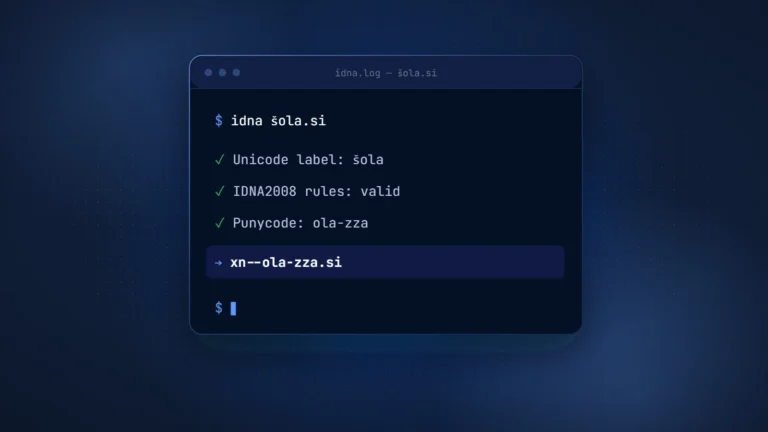
.si domains are open to founders anywhere in the world. Register.si’s General Terms and Conditions (version published November 15, 2024) say in clause 2.7 that a .si holder can be any natural or legal person, with no nationality condition. A .si name can be 2 to 63 characters long, may use the Slovene letters č, š and ž, and is registered for 1 to 5 years through a registrar.
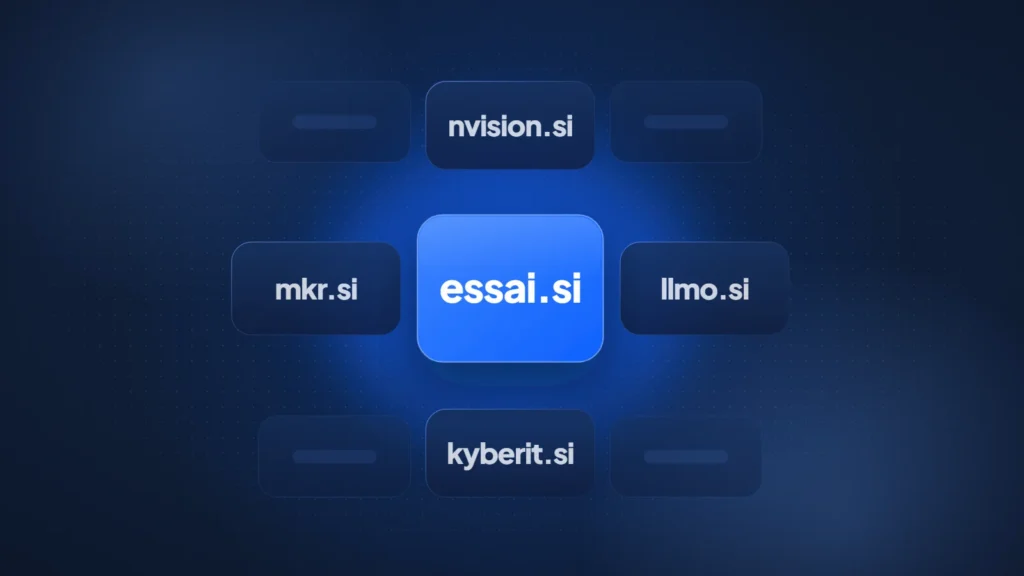
Here is how the patterns look on real .si names. essai.si uses the French word essai, meaning attempt or essay, which carries AI inside the word and SI in the extension. mkr.si drops the vowels and reads as “maker.” nvision.si is a sound-alike of “envision,” llmo.si is an acronym for LLM optimization, and kyberit.si alters the spelling of “cyber.”
BuySI Domains lists essai.si, mkr.si, nvision.si, llmo.si and kyberit.si for sale. Our overview of the .si domain makes the wider case for the extension.
We checked 40 AI name ideas in .ai and .si
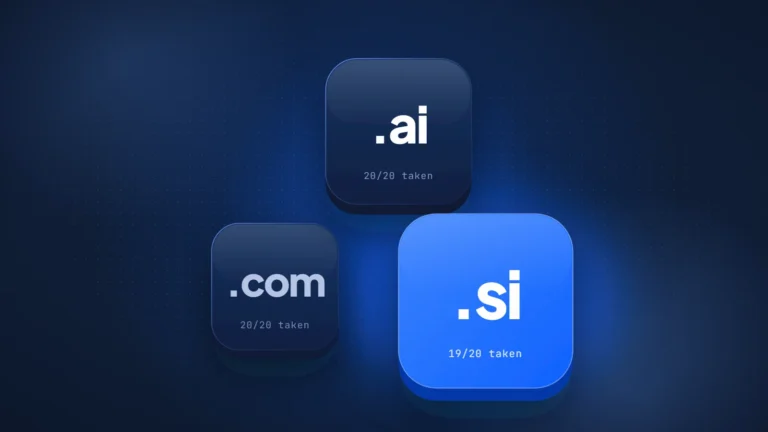
On October 22, 2026, BuySI Domains checked 40 AI-themed generic English words over RDAP in both .ai and .si. All 40 were already registered in both extensions, so none of these obvious one-word AI names can simply be registered today.
The list covered the words founders reach for first, such as agent, neural, tensor, vector, cortex and quantum. Each lookup queried the RDAP server that the IANA bootstrap file lists for the registry. Two random control strings returned “not found” in both registries, which confirms that the servers do report free names.
| Result (October 22, 2026) | .ai | .si |
|---|---|---|
| Registered | 40 of 40 | 40 of 40 |
| Registration date before 2010 | Not comparable | 17 of 40 |
| Registration date on or after November 30, 2022 | Not comparable | 13 of 40 |
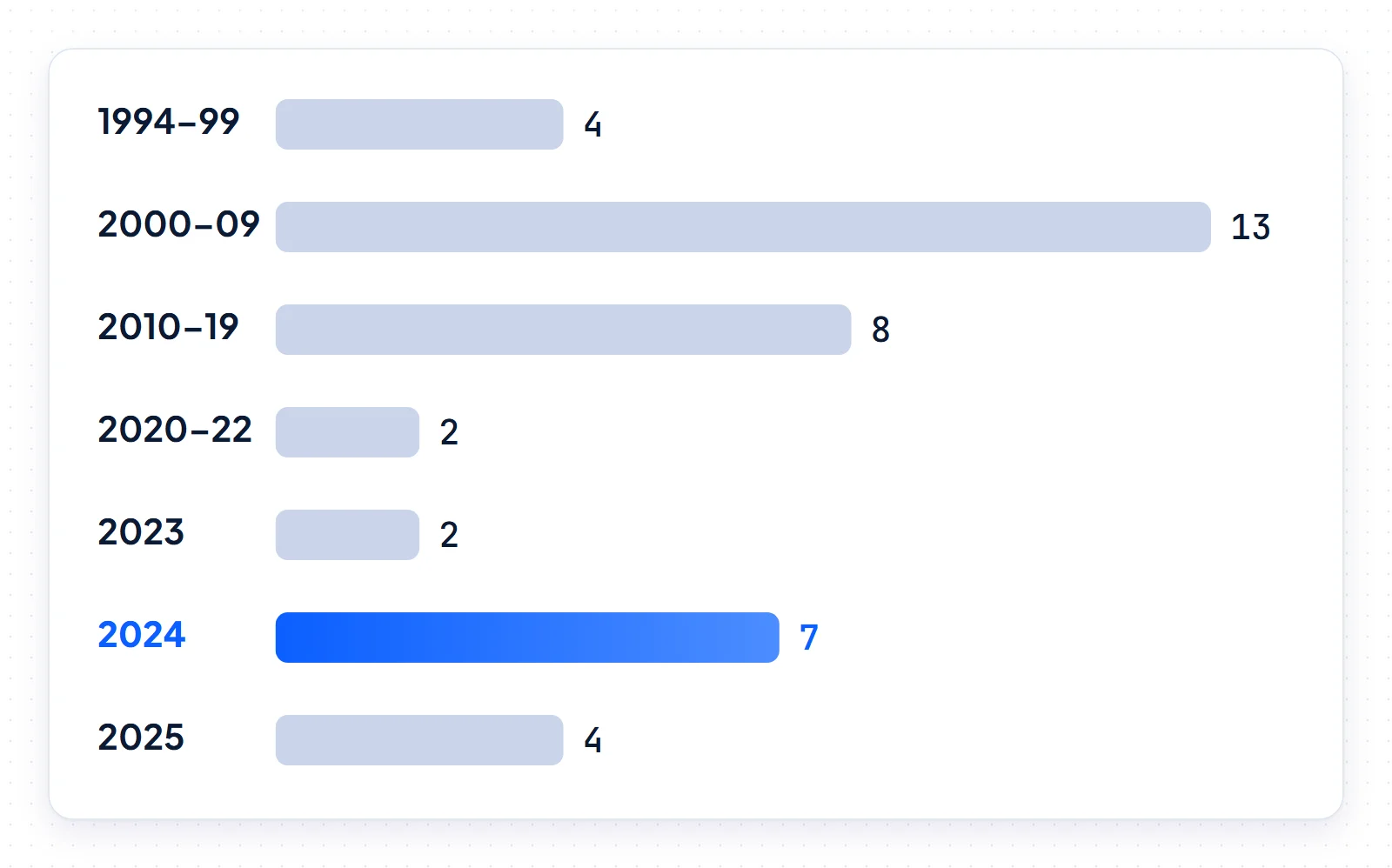
The .si registration dates show an old base and a new wave. Of the 40 names, 17 date from before 2010, and four go back to the 1990s. Another 13 have a registration date on or after November 30, 2022, the day ChatGPT launched.
One cluster is hard to miss: six of the names carry registration dates within the same three days of June 2024. The .ai dates are not comparable, because 38 of the 40 show December 15 or 16, 2017, which looks like a registry migration rather than a first registration.
Read the snapshot with three caveats. Registered does not mean in use or for sale. The .si date is the current registration event, so a name that dropped and was re-registered shows the newer date. We draw no inference about who registered any of these names.
The caveats do not change the main finding for founders: the obvious one-word route is closed. Build a name with one of the patterns above, approach an owner on the aftermarket, or choose a different extension where the word still carries meaning for your audience.
How to test a domain name idea before you buy
Test every shortlisted domain name idea in four steps before you register it or make an offer: say it aloud, search trademarks, check status and history, then decide. The trademark and status checks use free public tools.
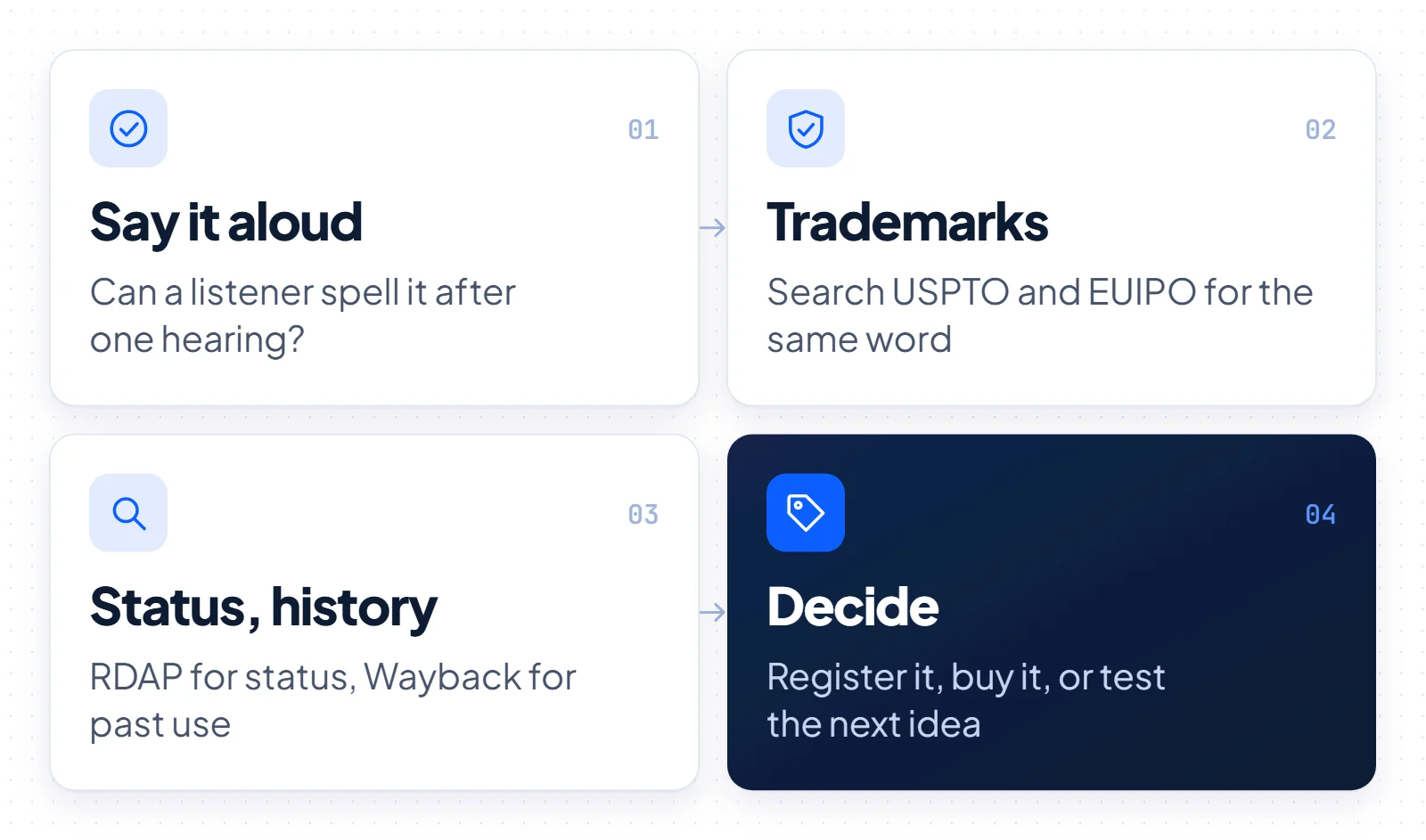
- Say it aloud. Read the name to someone once, without spelling it. If they cannot type it correctly after one hearing, it will leak visitors the way flicker.com collected Flickr’s misspellings.
- Search trademarks. Start with the free USPTO Trademark Search, which replaced TESS in 2023, then check EUIPO eSearch plus and TMview for Europe. A “no result” is not clearance, and our guide to trademark checks for an AI company name explains what to look for.
- Check status and history. An RDAP lookup shows whether the name is registered and since when; ICANN describes RDAP as WHOIS-like registration data in a standardized format. The Wayback Machine then shows what the domain hosted before, which matters if it carried spam or another brand.
- Decide. If the name is free and clear, register it. If it is registered, judge whether it is worth an aftermarket offer. If it failed a step, test the next idea.
What domain name generators are good for
Domain name generators are good at volume: they produce hundreds of raw combinations and show which ones are unregistered right now. They are poor at the checks that decide whether a name survives, namely trademark conflicts, meaning in other languages and the domain’s past.
Use a generator inside a pattern, not instead of one. Feed it the root words you picked, keep the handful of results that pass the say-it test, and run those through the four steps above. A generator’s “available” label covers registration status only.
Which naming pattern fits which founder
Choose the pattern by what the name has to do in its first two years, then generate ideas only inside that pattern.
- Consumer products that grow by word of mouth suit a real word, a compound or a place name, because listeners can spell them after one hearing.
- Companies that plan to file trademarks in several countries usually do best with an invented word or a classical root, which has fewer prior owners.
- AI products and developer tools can use a meaningful extension such as .ai, .io or .si, once the founders have read that registry’s rules.
- Founders on a tight budget can launch with a prefix or suffix and plan the upgrade from day one, as Dropbox and Facebook did.
- Products sold mainly by voice, such as podcasts and radio-led brands, should avoid domain hacks and dropped vowels.
Shortlist at least three names inside your chosen pattern, run each through the four-step test, and register the winner the day it passes.